On-the-fly Group-Forming Networks
In 2012, we developed the concept of audience-forming network (or group-forming network). This work started in a now defunct company, but the effort later moved to PhaseZero.
The idea of an audience-forming network (AFN) is to provide engagement spaces so that any interacting group of individuals could potentially become an audience. The spontaneous formation of specific audiences are hard to predict. The key is therefore to provide mechanisms that facilitate user content exchange and curation, and let audiences spontaneously coalesce around emerging influentials and their following. The technical challenge is to allow these engagement spaces to be created on-demand and audiences/groups to be formed on-the-fly.
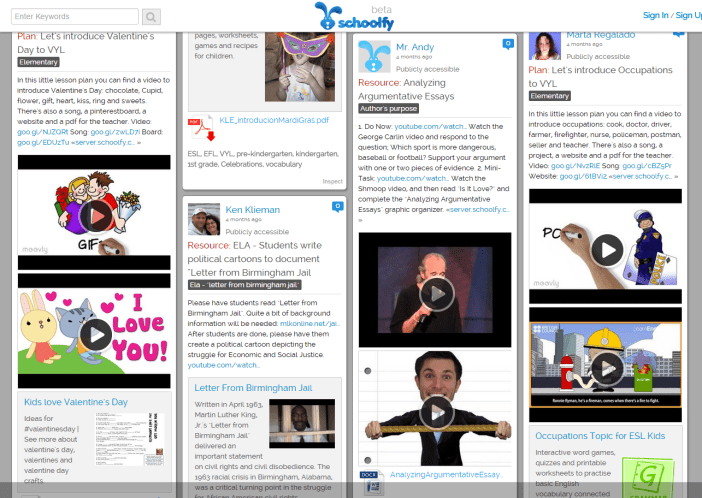
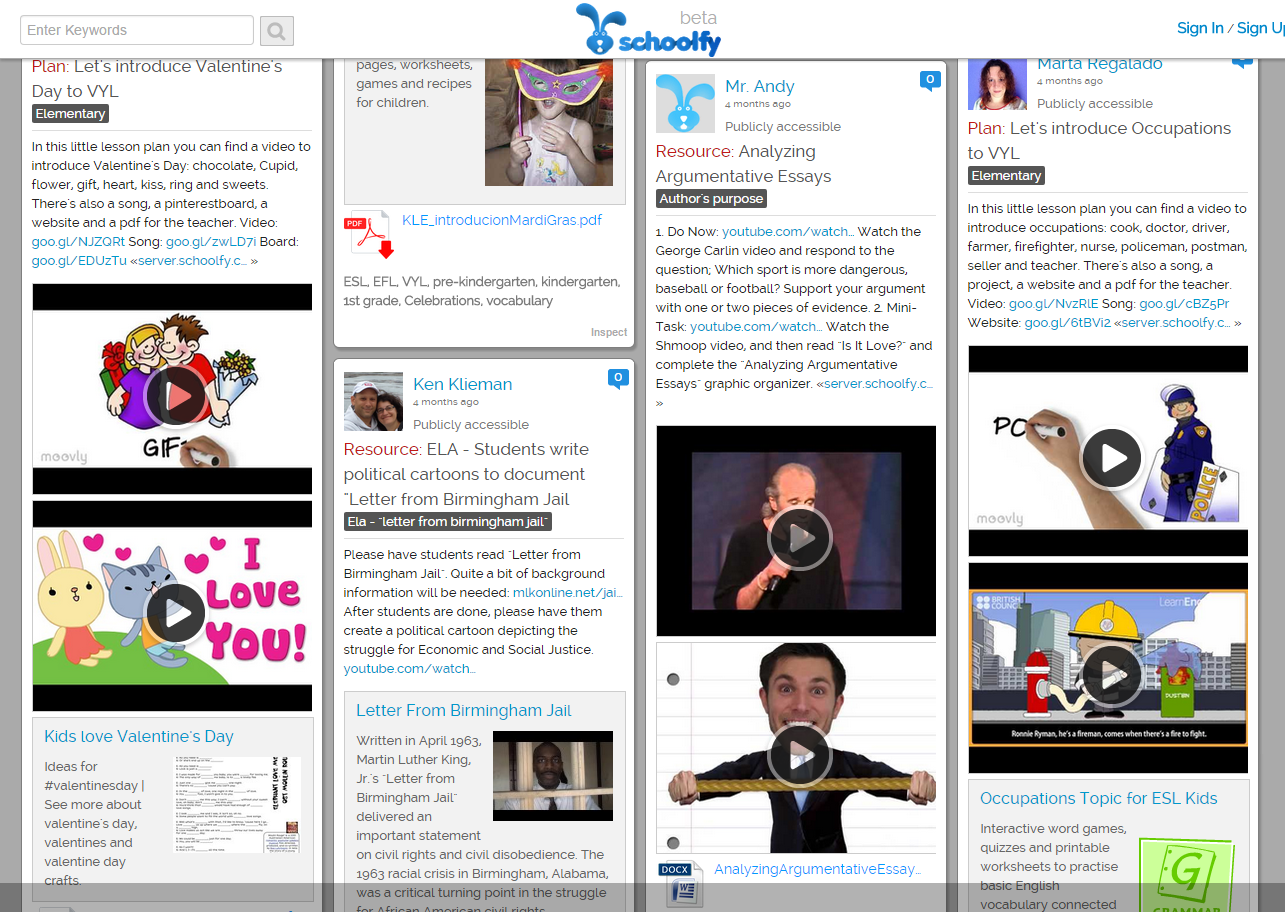
In 2013-2014, we applied this technology to develop the Beta version of Schoolfy. The original intent was to develop a lesson-centric learning system where every lesson was its own micro social network. At the top-level, the Schoolfy presents a wall similar to Pinterest’s, but the actual “posts” are closer in functionality to Tumblr’s. Here is a screenshot of the wall:
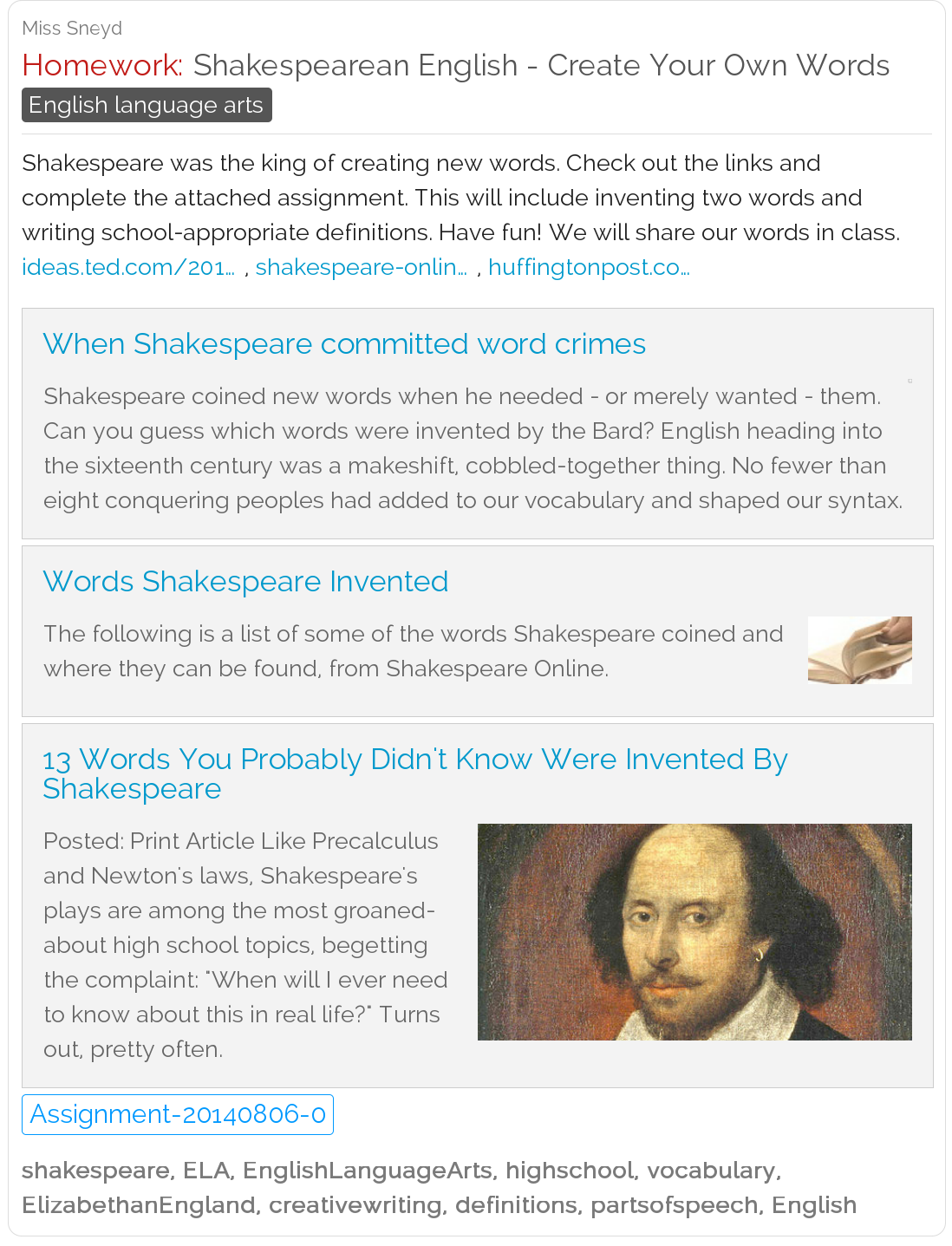
 However, the “posts” in fact are micro (or nano) social networks. Each of these posts is in fact something called a SLIC (for Schoolfy Lesson Integrated Capsule) . Each SLIC contains: 1) content, 2) audience space, 3) discussion forum, 4) an optional examination area, and 5) an optional grading area. Here is an example:
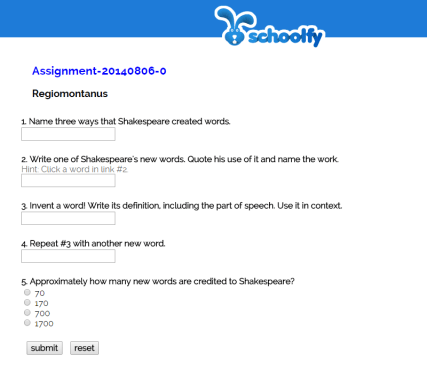
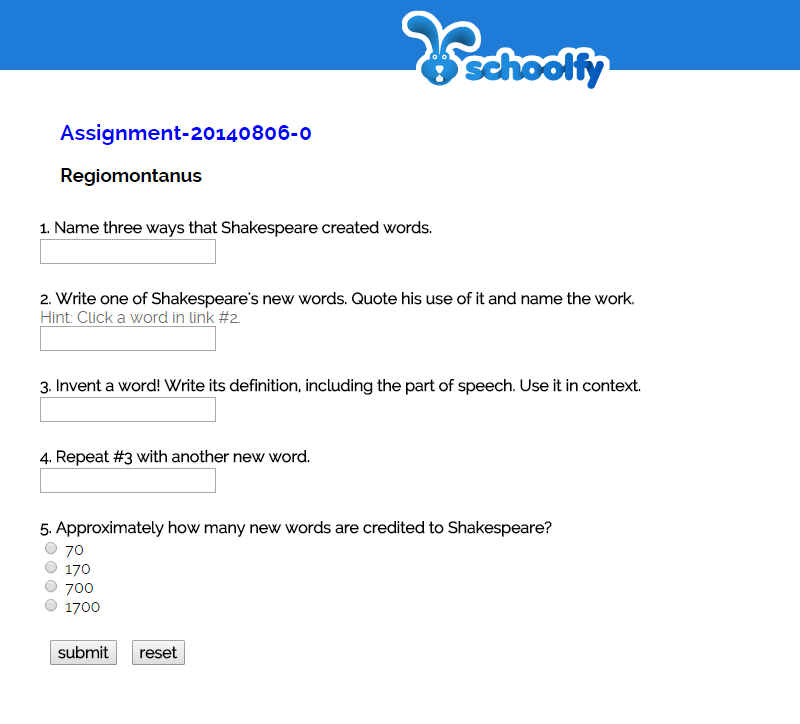
 The assignment button opens an exam (when an exam is attached). For the creator of the capsule the button opens the grading area instead. Exams can be created on-the-fly through a minimalist editor that is part of the lesson publisher. The author can enter the correct answer to each question. Once the lesson is created, the system automatically creates a grading area for that exam, and the provided answers are used for auto-grading (the system grades automatically).
 The whole project is a compound system that uses four independent services developed in Ruby-on-Rails, two ancillary services developed in Node.js, and uses MySQL and MongoDB. The audience-forming service implements a dual-graph network where audiences are “first-class citizens” alongside users, and audiences can form network relationships with other audiences. Notifications are pushed to browser in real-time whenever a SLIC is publoshed, deleted or a comment is posted within.
 However, the “posts” in fact are micro (or nano) social networks. Each of these posts is in fact something called a SLIC (for Schoolfy Lesson Integrated Capsule) . Each SLIC contains: 1) content, 2) audience space, 3) discussion forum, 4) an optional examination area, and 5) an optional grading area. Here is an example:
 The assignment button opens an exam (when an exam is attached). For the creator of the capsule the button opens the grading area instead. Exams can be created on-the-fly through a minimalist editor that is part of the lesson publisher. The author can enter the correct answer to each question. Once the lesson is created, the system automatically creates a grading area for that exam, and the provided answers are used for auto-grading (the system grades automatically).
 The whole project is a compound system that uses four independent services developed in Ruby-on-Rails, two ancillary services developed in Node.js, and uses MySQL and MongoDB. The audience-forming service implements a dual-graph network where audiences are “first-class citizens” alongside users, and audiences can form network relationships with other audiences. Notifications are pushed to browser in real-time whenever a SLIC is publoshed, deleted or a comment is posted within.
 PhaseZero